
Farmington Resident Lookup Record Coverage
A name alone rarely settles identity. The strongest Farmington resident lookup combines official records that each answer a narrow question. The Dakota County property card is useful when an address or parcel is known, while the state voter tool is an individual status check that requires the voter’s own identifying details. Court, marriage, death, and probate sources can establish dates or relationships, but their access rules differ. Treat every result as a record-specific clue, then corroborate it with a second source.
| Record | What It Can Confirm | Farmington Route | Access Condition |
|---|---|---|---|
| Parcel and tax card | Owner, owner mailing address, situs, parcel and legal description | Dakota County Property Information Search | Free public card; mailing is not occupancy proof |
| Registration match | A matching person’s registration status and voting jurisdiction | MNVotes | Individual match, not a resident browse |
| Court docket | Cases, parties, events, hearings, dispositions and available documents | Minnesota Court Records Online | Public results have court-access limits; certified copies are separate |
| Death and marriage indexes | Death date/file number, or marriage date, county and certificate number | MDH and MOMS | Indexes differ from certificates |
| Probate and recorded transfers | Estate roles, deed parties and legal-property connections | Dakota County District Court and RecordEASE | File and image availability varies |
Start with the field already known. A street address points to the parcel search. A person who wants to check their own registration can use MNVotes. A court number, citation, attorney name, or a name with a time period belongs in MCRO. For an older family question, a death-index result or MOMS record may lead to an obituary, issuing registrar, or probate file.
Define a Farmington Resident Identity
Write down the exact name, likely spelling variants, a middle initial if known, and one non-sensitive corroborating fact before running a Farmington resident lookup. MCRO supports exact-name searching, a wildcard after at least two characters, and a Sounds Like mode. MOMS also offers starts-with, sounds-like, and exact-match choices. Those tools help with maiden names, initials, and recording errors, but they do not solve a common-name collision by themselves.
Match the type of address as carefully as the name. A property situs is the physical parcel. An owner mailing address is where tax notices are sent and may be outside Farmington or Dakota County. A voter residence, a business registered office, and a historical-directory address serve different purposes. An owner card does not establish who occupies a home. A business record can establish an affiliation, not a personal residence.
Note: Preserve the spelling shown by each custodian, then compare age, relationship, address type, and record date before treating two same-name records as one person.
Confirm Farmington Registration Details
MNVotes is designed for an individual registration confirmation. It asks for first name, last name, date of birth, and either the ZIP-search or county-search address path. The ZIP path still requires ZIP, county, city or township, house number, street, and a unit when one applies. The result is a matching person’s confirmation or status information, not a list of everyone at an address or in a ZIP.
Registration data updates nightly, and a recent registration can take up to 14 days to process. Minnesota Statutes §201.091 withholds full date of birth and identifying numbers from public voter information. The full voter-file request is separately restricted to registered Minnesota voters using it for elections, political activities, or law enforcement. Do not treat an individual lookup result as a household roster.
A Farmington Police data-request form shows the separate route for a local public-record request, with fields for the request type, requester, incident, officer, and dates. It does not replace a court or voter search.
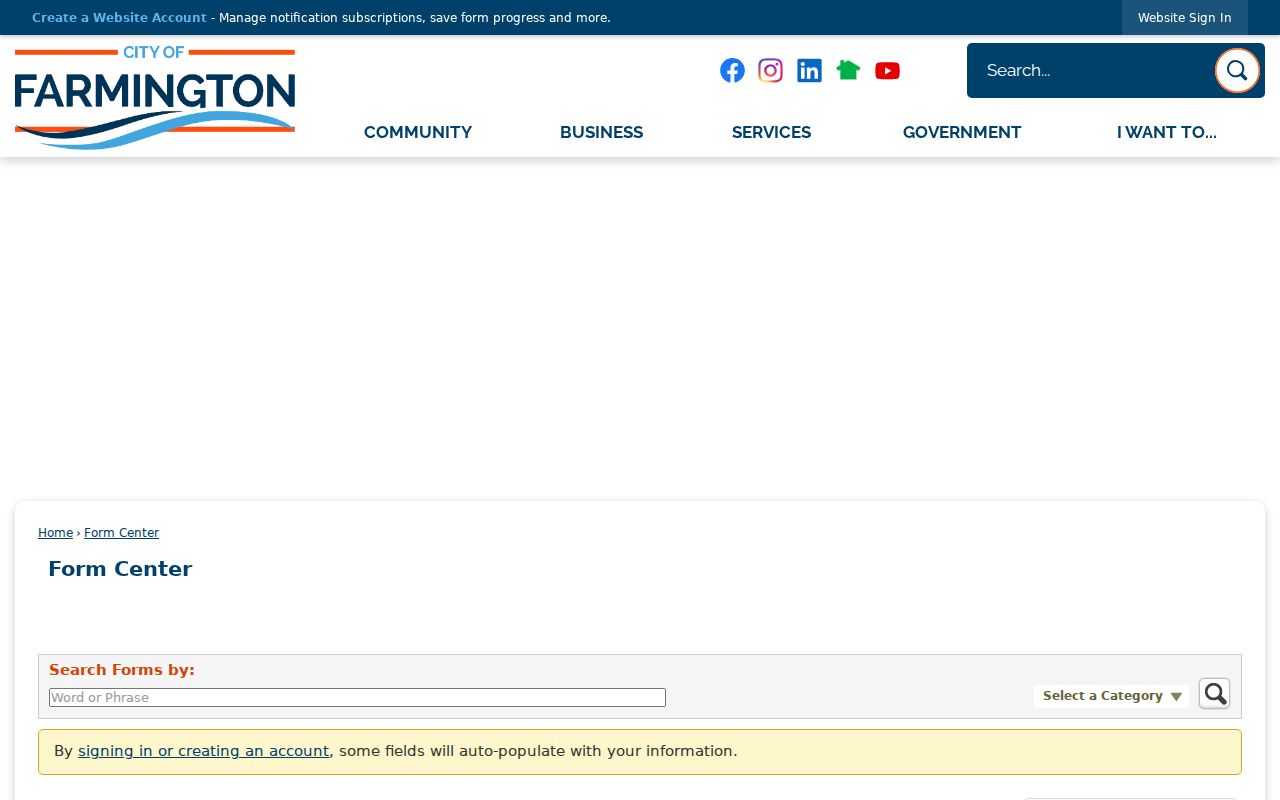
Use the responsible custodian for the record sought, because police records, court files, voter registration, and property data each have their own classification and release rules.
Search Farmington Resident Cases in MCRO
MCRO covers Dakota County District Court matters through statewide case, document, hearing, and judgment search modes. Its Case Search can use party name, case number, citation number, attorney name, or attorney bar number. Hearing search adds judicial officer and date range. Judgment search includes debtor and judgment-related criteria. Document search looks for document metadata and case context, though an image may not be available online.
Pending criminal defendant-name searches may be excluded from web-name results until conviction. Try a known case number, citation, or attorney field when lawfully relevant. Sealed, expunged, juvenile, destroyed, protected-family, and otherwise nonpublic records may be absent. A missing web result is not proof that no court matter exists.
A public MCRO result can identify the following record elements before a requester asks the court for a file:
- Party or business name, party role, and associated case parties
- Case number, court or county, case type, and search context
- Filing, event, hearing, document, and disposition dates
- Case events, financial information, available public documents, and hearings when indexed
The Dakota County jail search is another narrow, current-custody source. Its display is not a legal finding and the county warns that custody information may be incomplete or inaccurate.
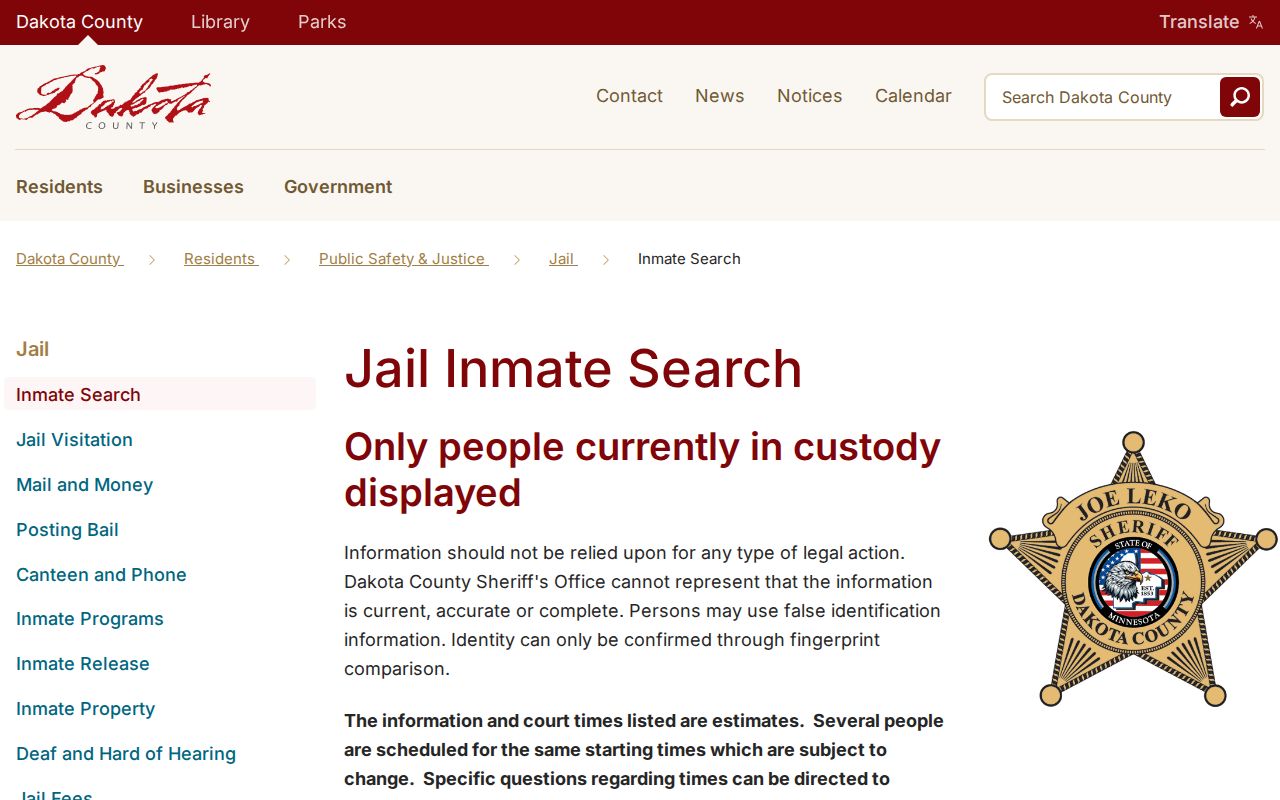
A custody entry or criminal complaint is an allegation or status record, not proof of guilt. Court disposition and the relevant custodian remain the right verification route.
Verify a Farmington Resident Across Records
Verification means checking agreement between records, not collecting every possible result. A person connected to a parcel may have a different mailing address. A court name match may belong to another person. A vital-index hit can supply a date but is not a certificate. Follow this sequence when the aim is to confirm one Farmington resident without confusing them with a namesake.
- Record the name variation and an address clue. Search the Dakota property card by street address or parcel ID when land ownership is relevant.
- For a self-supplied registration check, enter the full MNVotes identity and address fields. Keep its status result separate from the property card.
- Run MCRO using the full name, then an initial-free or variant form. Compare case number, county, dates, party role, and events before drawing a conclusion.
- Use the MDH death index or MOMS only to add a time or certificate reference. Request a certified copy from the appropriate custodian when eligibility and the task require it.
- Docket
- A court case’s running list of parties, filings, hearings, events, and decisions.
- Index versus image
- An index identifies a record and its key fields; an image is the scanned document itself and can have separate access rules.
- Certified copy
- A custodian-issued copy bearing the certification required for an official record purpose; an online search result is not one.
MCRO results may show party role, case number, court and county, case type, events, dispositions, financial information, court dates, and public documents when available. Its public courthouse terminals can be more complete than the web interface, while locally stored paper files may be available through the court counter. MCRO cannot issue a certified copy. Contact Dakota County Court Administration for the file or certificate; the inspected fee schedule listed $14 for a certified civil or criminal instrument and $14 for a certified printout of imaged or e-filed material.
Farmington Heir and Probate Trail
For a family or estate question, begin with an MDH death-index result or a verified obituary, then move to a Dakota County probate case, will book, personal representative, and recorded deed transfers. The death index covers 1997 to the present and asks for first name, last name, and either birth date or Social Security number. Never publish or expose a Social Security number. A result can show the decedent name, death date, and state file number, but it is not the certificate.
Historic Dakota probate and naturalization holdings can also be researched through Dakota County Historical Society and the Minnesota Historical Society. Heir names, estate addresses, and family material can be redacted or confidential. A probate clue should support a family-history trail, not a claim about a person’s present location.
Farmington Vital Index Checkpoints
MOMS searches Dakota County marriage-index records from 1850 to the present. It can be narrowed by county, applicant, name, date range, and name-match option. Results identify county, certificate number, marriage date, and applicants. If a search returns more than 50 results, refine it. The index does not replace the certificate, which comes from the county that issued the marriage license.
Birth records are more restricted. MDH and local registrars hold births from 1900 forward. A public requester may use the noncertified informational path for $13; a certified birth copy costs $26 and needs an eligible tangible-interest category. MDH has no routine walk-in service. Mail and fax applications generally require the form’s notarized signature, identification, and eligibility material, while a local county registrar can accept an in-person signature and inspect ID. Divorce decrees come from Dakota County District Court, not MDH.
Note: A death-index miss can reflect spelling, timing, or index limits, so check the issuing registrar or a historical source before concluding no record was registered.
Farmington Resident Lookup Fallbacks
When an online result stops short, use the office that holds the record. Minnesota’s Government Data Practices Act, Minnesota Statutes chapter 13, presumes government data public unless another law classifies it differently. It applies to executive-branch city, county, and state records, not court dockets. A Farmington city request should be written and mailed or dropped at City Hall. For judicial material, use MCRO, a public courthouse terminal, or court administration instead.
For public data, inspection is generally free and a requester usually need not explain a purpose. Copies may carry allowable costs, and there is no universal fixed deadline for every public-data request. A person seeking their own data under Minn. Stat. §13.04 has a ten-business-day rule. Ask the recorder about document coverage and copies, the assessor about card fields, the registrar about vital eligibility, or the court clerk about certified access.
The Minnesota DOC public viewer is limited to adults committed to the Commissioner of Corrections who are still in prison or under supervision. It accepts first and last name or a complete six-digit MNDOC identification number.
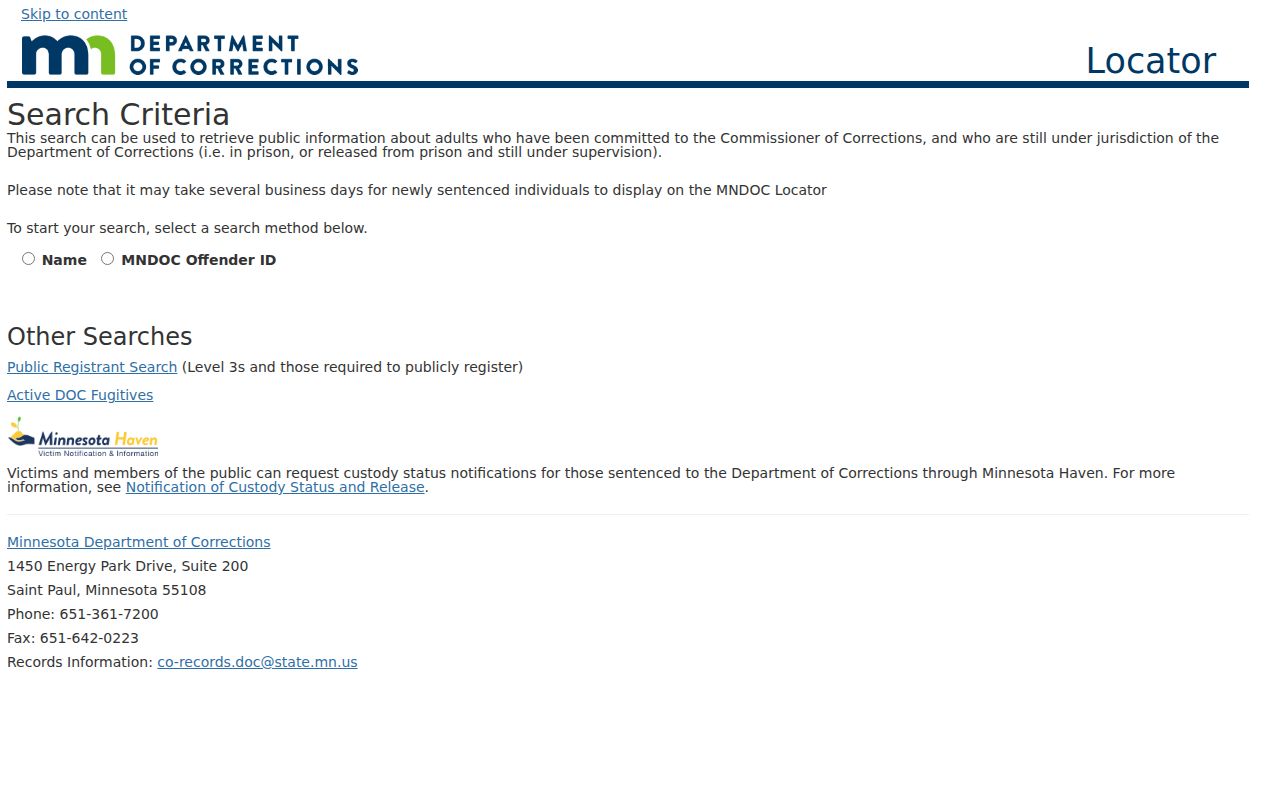
A newly sentenced person may take several business days to appear. No result does not establish that a person has no historic court or custody record.
Farmington Resident Lookup Privacy Limits
MGDPA access does not open classified voter, vital, juvenile, investigative, court, utility-customer, or motor-vehicle data. The Minnesota Consumer Data Privacy Act took effect July 31, 2025. It gives consumers rights over covered business data, but it does not turn public government data into private data. For a wrong government record, contact the custodian for correction or classification review. A removal request to another operator does not alter a Dakota County property card, court file, voter record, or vital record.
Safe at Home protects participants facing specified safety risks through a substitute post-office box and mail forwarding. Minn. Stat. §13.045 protects participant identity and location information, subject to limited statutory exceptions. Never use a property, voter, or other public record to reverse-engineer or disclose a protected address.
Lawful use. Use a Farmington resident lookup for personal, lawful research and verify facts with the custodian. Using public records to stalk, harass, intimidate, or harm anyone can violate Minnesota law.