
Finding Farmington Residents by Record
Farmington has no single public household roll. The useful trail depends on the starting fact. A street address leads to Dakota County parcel information, where an owner, tax mailing address, legal description, and map location may appear. A self-supplied name, date of birth, and address can support an individual registration check through MNVotes. A past household may appear in the 1945 telephone book, census records, newspapers, or probate material. Each source records a different relationship to Farmington, so an owner, subscriber, voter, or court party should not be treated as the same thing.
Use county and state records as separate checks. The parcel card can establish ownership, but it does not identify every person at an address. MNVotes is a status confirmation tool, not a street-wide browse list. Court and vital indexes can add a date or case trail, while library collections help with an older name. For a street-by-street property route, the Farmington Street Directory follows the address chain in more detail.
- Start with a precise fact, such as an address, full name, or old telephone listing.
- Use the county property search for an address or parcel ID, then save the legal description and municipality.
- Use MNVotes only for an exact individual registration check with the required identity and address fields.
- For a deed or earlier owner, carry the legal description into RecordEASE or ask Property Taxation & Records about books, microfilm, and copies.
- For an older household, compare directory, census, obituary, probate, and newspaper evidence.
Farmington Resident Records Offices
Farmington records are distributed. The city handles municipal data requests and address-linked permit or code material. Dakota County keeps the parcel, tax, recorded-document, map, plat, and local service routes. The Minnesota courts, health department, and Secretary of State provide separate statewide searches. A request that starts in the wrong office can miss a record even when it is public, so use the custodian that created or maintains the record.
Dakota County Property Taxation
1590 Highway 55
Hastings, MN 55033
651-438-4597
Dakota County GIS
Online property and map service
Parcel cards and public map layers
952-891-7081
Minnesota Elections Office
20 W. 12th Street, Suite 210
St. Paul, MN 55155
651-215-1440
Farmington City Hall at 430 Third Street is the city route for general Minnesota Government Data Practices Act requests. Police records use a separate department form and records unit. Dakota County libraries, the Historical Society, and the Minnesota Historical Society become important when a current portal has no historical answer.
Farmington Parcel Address Search
The Dakota County Property Information Search is the strongest current-address starting point for a Farmington resident trail. It accepts a parcel ID with or without dashes, or a whole or partial street address. When an exact address does not return a match, county help suggests using less text, such as a house number or part of the street, then choosing a candidate parcel. A map click can open the same panels after a street segment is in view.
| Property search control | How it works | Useful Farmington result |
|---|---|---|
| Parcel ID | Optional alternative to address | Opens the most exact property record |
| Street address | Full or partial text is accepted | Returns candidate parcels for selection |
| Property Information | Default card panel | Owner, mailing address, municipality, legal and tax description |
| Tax and Building panels | Optional card panels | Tax, homestead, assessment, and building facts |
| Map layers and print | Optional map tools | Parcel context, PDF card, and available overlays |
A parcel is a defined piece of land in the county system. Its situs address is the physical location. The owner mailing address is where tax correspondence goes, which can be a different place. A homestead flag can be helpful context, but neither it nor a mailing address proves that a named owner currently lives at the Farmington situs.
- Parcel
- A county-tracked property unit identified by a PIN or parcel ID.
- Situs address
- The physical address used to find a property on the map.
- Legal description
- The lot, block, plat, or land description used in recorded documents.
- Index
- A finding tool that points to records, not necessarily the record image itself.
Farmington MNVotes Registration Checks
MNVotes handles one person at a time. It asks for first name, last name, and date of birth, then uses either a ZIP Code or county path with city or township, house number, street, and an optional unit. The result is a registration confirmation or status response for a matching identity. It is not a public list of everyone on a Farmington street, and a recent registration can take up to 14 days to process even though the data is updated nightly.
The MNVotes entry screen shows the address and ZIP branches used for that identity match.
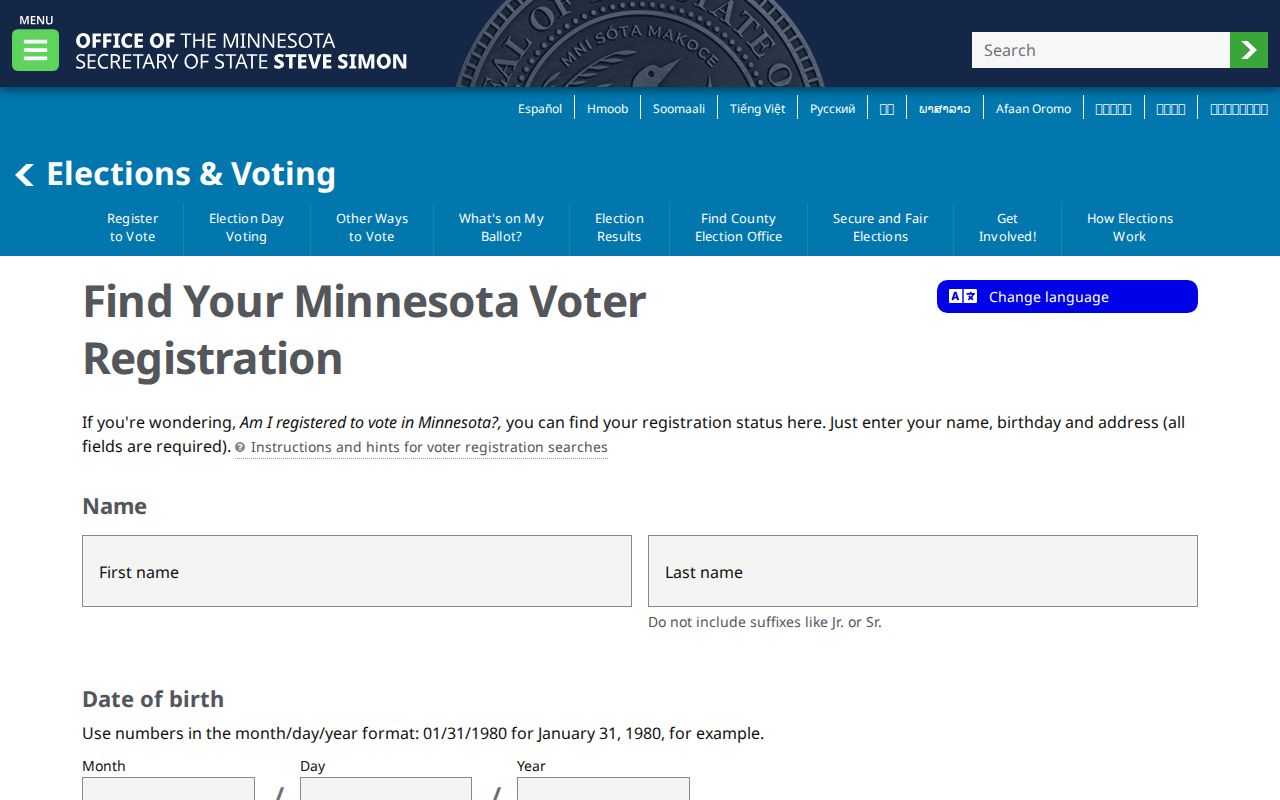
Use the visible fields as a check on a record already tied to a person, not as a substitute for a household roster.
Minnesota Statutes §201.091 describes public voter information but protects full dates of birth, Social Security numbers, driver or state ID numbers, military and passport numbers, and email. The paid full voter-file request has its own certification and allowed-use rules. A ZIP is a mailing geography, not a precinct or a shortcut to a citywide list.
Farmington Court and Vital Trails
A name that needs more context may lead to Minnesota Court Records Online, known as MCRO. The statewide system has name, case number, citation, attorney, document, hearing, and judgment search modes. Court results can contain parties, events, dispositions, and available documents, but sealed, expunged, juvenile, restricted, or older material may not appear online. The court clerk and public access terminals are the fallback when a web result does not include the needed file.
Vital records answer different questions. The MDH death index covers 1997 to the present and takes a name plus birth date or Social Security number. MOMS can search marriage data, including the Dakota County index from 1850 forward, while certificates follow the issuing county or the appropriate custodian. A birth record is not an open name list. Minnesota Department of Health rules distinguish a noncertified informational copy from a certified copy with eligibility requirements.
MDH birth-record instructions explain the application and eligibility route.
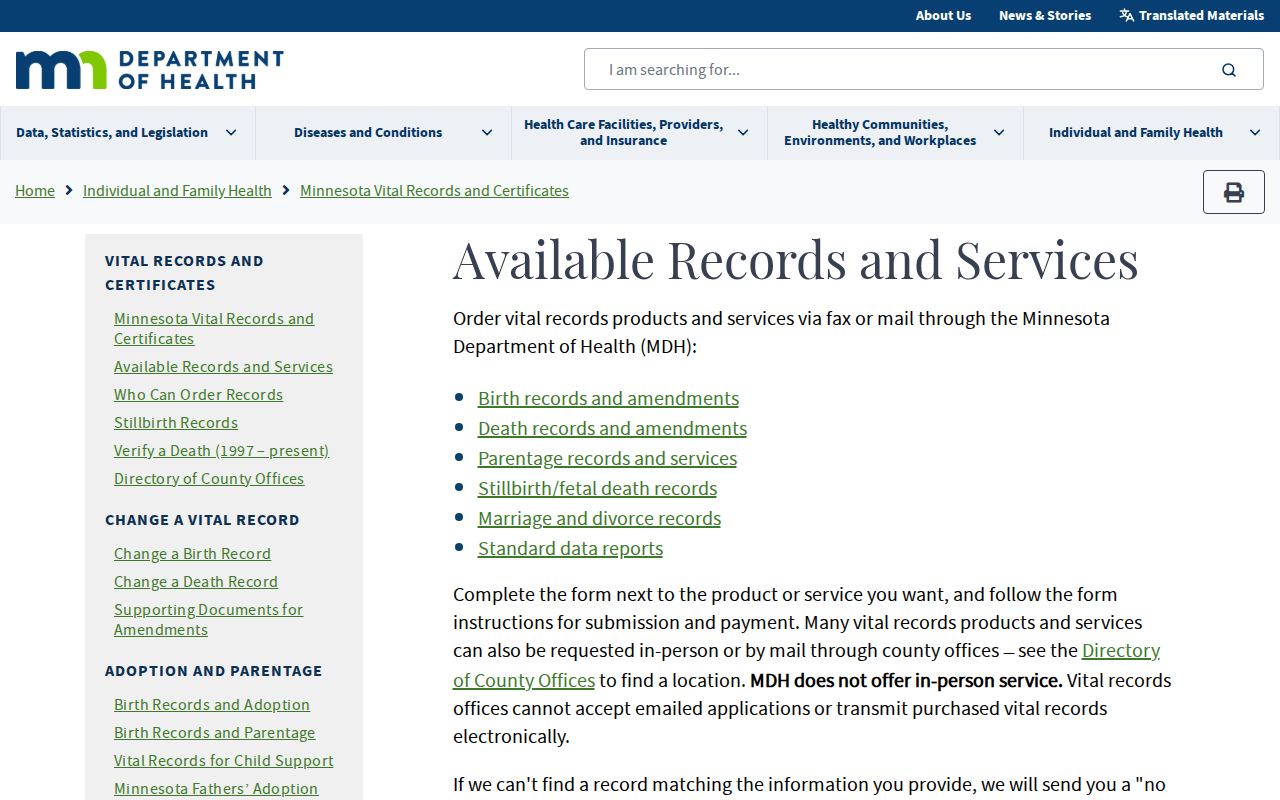
The form is a reminder that an index hit and a certificate are separate products, each with its own access rules.
Farmington Deed Index Dates
Recorded documents can connect a person to a property role, not automatically to present occupancy. Dakota County Property Taxation & Records uses RecordEASE for its Abstract and Torrens computer indexes. The inspected notice showed the index current through August 25, 2026 and says abstract indexing reaches back to July 8, 1993. That date is a useful Farmington records boundary: it marks the online abstract-index start, not the beginning of county land records.
RecordEASE displays login, account, payment, and subscriber controls before its detailed search screen. Grantor and grantee fields, document filters, result sorting, and a Farmington deed sample were not visible without authenticated access. Do not assume that an online account screen offers an anonymous deed image. For an older chain, take the current parcel card's legal description to the county counter, deed books, microfilm, or a recorder research request.
RecordEASE boundary. Dakota County's visible 1993 online abstract start is a portal limit, not a reason to skip older county books, plats, archives, or staff-assisted research.
Current Farmington Resident Record Sources
Current Farmington directory evidence is fragmented by purpose. The property card is best for ownership and parcel facts. MNVotes confirms an exact registration match. The recorder tracks parties to property documents. City sources identify officials, staff, permits, code cases, and public civic business, but they do not create a general resident roll. The best result comes from comparing the source against the exact question rather than stretching one list beyond its limits.
| Farmington source | What it can establish | Custodian | Access path |
|---|---|---|---|
| Parcel and tax card | Owner, mailing address, parcel and tax context | Dakota County | Free address or PIN search |
| MNVotes | One matching registration status | Minnesota Secretary of State | Identity and address fields required |
| RecordEASE | Recorded-property party and document trail | Property Taxation & Records | Account route or county fallback |
| City directory and boards | Public staff and appointed civic roles | City of Farmington | City directory and meeting records |
| Police and city records | Public data subject to classification rules | Farmington departments | Written or department-specific request |
For a single person whose name must be checked across these different record types, use the separate resident lookup workflow rather than treating a property owner field as a complete identity result.
Farmington Records: Portal or Counter
Online access is useful, but it is only one channel. Property Information provides a free card and map. RecordEASE has an authenticated path, while Property Taxation & Records also accepts copy and research requests by mail or at county locations. MCRO can lead to a court case, but a courthouse terminal, clerk, or certified-copy request may be needed for a file. Library and archive material can require an in-library database, an interlibrary-loan request, or paid staff research.
| Official route | When it helps | Important limit |
|---|---|---|
| Free public portal | Current parcel facts, maps, registration confirmation, and some indexes | Search fields and history vary by custodian |
| Counter, mail, or phone | Older deeds, copy questions, court files, and classification help | Fees, identity rules, and processing times can apply |
| Library or archive | Directories, census, newspapers, and historic county groups | Coverage can be incomplete or mediated |
| Commercial record category | May produce a lead that needs independent checking | Profiles can be stale, merged, or unclear about source |
When a portal fails, ask the custodian which non-web channel holds the record rather than filling the gap with an unverified result.
Farmington Privacy and Safe at Home
The Minnesota Government Data Practices Act begins with public access to government data, but it also preserves classifications and protected information. Voter, vital, court, law-enforcement, juvenile, investigative, utility, and motor-vehicle information each have limits. The Driver's Privacy Protection Act restricts personal motor-vehicle data, and a public-record request does not override that rule. A missing name in a public search can reflect the record's scope or a protection, not proof that a person has no connection to Farmington.
Minnesota Safe at Home gives qualifying people a substitute mailing address and protects identity and location data under Minnesota Statutes §13.045. The program is for Minnesotans facing specified safety risks and uses trained application assistants. Never try to reconstruct a protected address from parcel, voter, or other records.
Lawful personal use. Farmington public records can support family history, estate questions, civic research, and property curiosity. Do not use them to stalk, harass, intimidate, or harm anyone.
Farmington Civic Affiliation Clues
A public role or business filing can help distinguish two people with the same name, but it does not establish where either person lives. The City of Farmington's license materials cover categories such as liquor, tobacco, gambling, peddler, solicitor, and certain other permits. The city says it does not issue a general business license. Minnesota's Secretary of State business search can show a legal name, filing status, registered agent or office, filing history, and available copies.
Minnesota Secretary of State business services provides entry points for business filings, UCC, CNS, copies, and certificates.
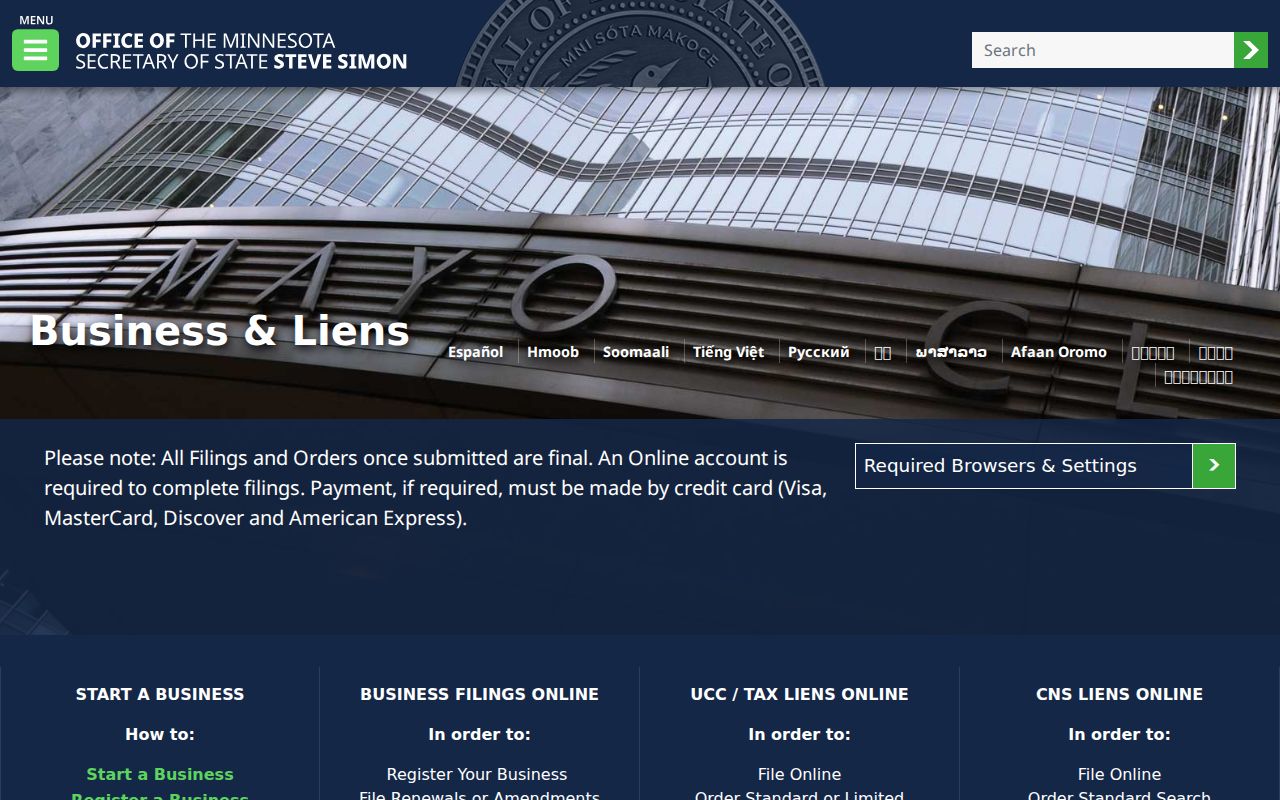
A business address, organizer, or registered agent is an affiliation clue that still needs a date, status, and independent record check.
Historical Farmington Resident Directories
The verified local historical snapshot is the July 1945 Central Telephone Directory digitized by the Dakota County Historical Society. It lists telephone subscribers, businesses, exchange numbers, and some location wording for Farmington and nearby areas. A subscriber entry can place a name or business in the telephone system at that time, but it does not prove ownership, full household membership, or continued residence. Children, unlisted subscribers, and people without service can be absent.
Older and later city-directory work uses more than one shelf. Dakota County Library offers genealogy databases, newspapers, and interlibrary loan. The Minnesota Historical Society can perform a staff city-directory search for one name or business in up to five years. Its directory collections, the Historical Society, census resources, and local newspapers should be paired with the subscriber record. The Farmington City Directory has the collection-by-collection historical method.
Farmington's 1945 Directory Evidence
The 1945 Central Telephone Company issue uses a record style that differs sharply from a modern address file. Entries can show initials, a surname, the abbreviation “res,” a business description, and a Farmington exchange number. City Hall appears with 197-2 in the inspected PDF, while other entries include homes, farms, and businesses. Preserve initials and spelling from the original page because a name variant may be the bridge to a census, newspaper notice, marriage index, obituary, deed, or probate file.
Farmington's early civic history makes that care especially useful. The city was platted in 1864, the railroad depot and business district followed in 1865, and incorporation came in 1872 after earlier efforts. A 1869 incorporation petition reportedly had 40 signatures. The story explains why early people evidence can turn up in township, county, railroad, church, or newspaper material rather than in a continuous municipal directory.
Note: No verified complete Farmington Polk run or official reverse-directory year list was found, so request a specific volume before relying on an address-to-subscriber search.
Farmington Requests Beyond Online Search
A missing online result is often a routing issue. Farmington's general data-request instructions explain the city path under the MGDPA, while police data uses its own detailed request form. Police requests may include an accident, police, statistical, calls-for-service, or other data category, plus incident dates or details. Classified or protected material can be withheld or redacted, and some older police records may have been disposed under retention rules.
Farmington's general request page distinguishes city data from the police process.
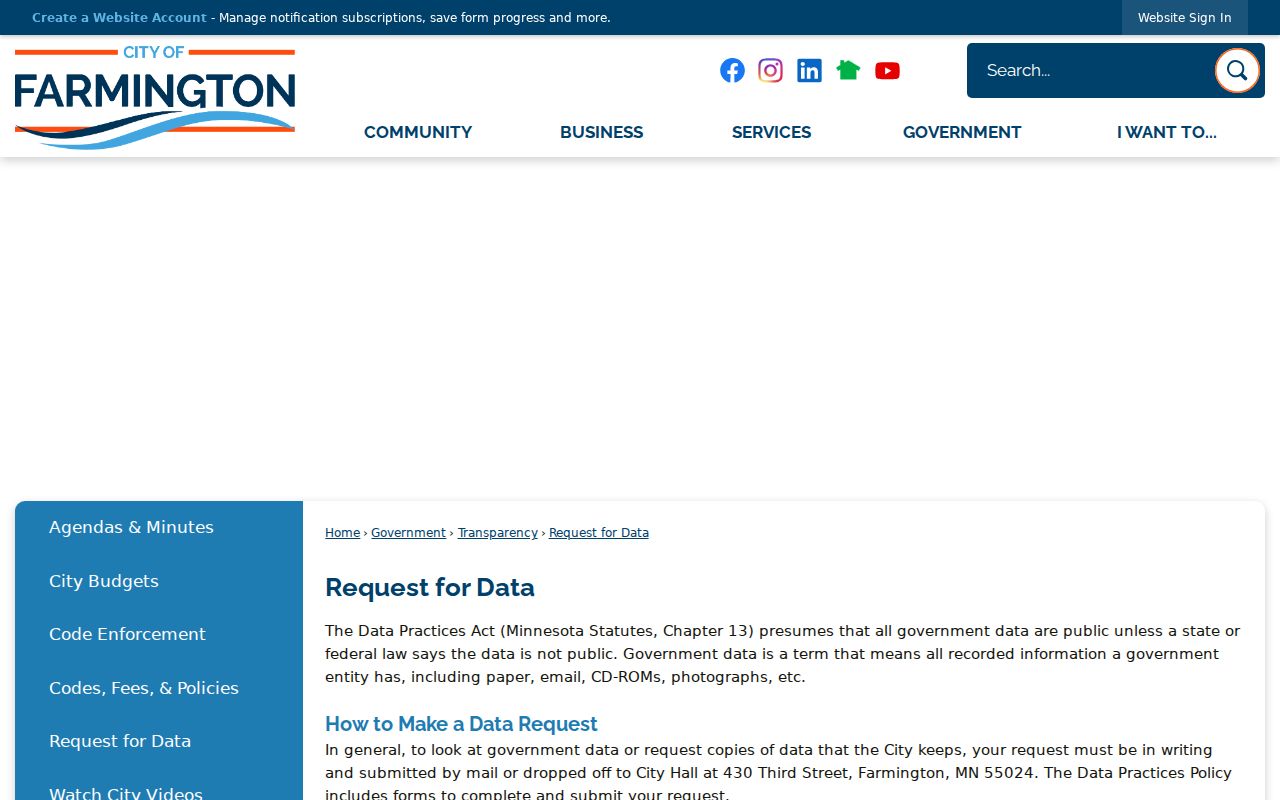
Use a written request to ask the responsible office about access, copies, classifications, or correction routes when no public index exposes the needed record.